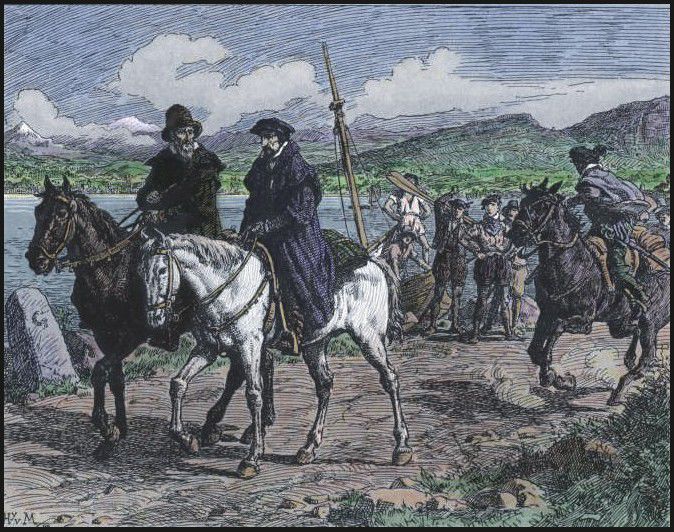
In the beginning, just after Calvin’s coming, the City Council worked closely with the church ministers. The Council agreed with Calvin’s article on church discipline, the liturgy, catechizing, and a subscription of a confession of faith by all the citizens of Geneva. Everyone who did not subscribe this confession had to leave the city. Even before Calvin’s coming, the City Council made certain decisions to oppose the looseness of morals of the city. Playing cards, gambling and cursing were forbidden. The shops had to be closed on the Lord’s Day. The people who didn’t go to church risk a fine. Under Calvin’s leadership, Geneva was divided into districts. Elders monitored the lives of the people. Those who sinned publicly were warned by the consistory. Sometimes those people were forbidden to take part in the Lord’s Supper. At this point the City Council began to take action against violation of the city laws. This led to resistance from the citizens. Calvin’s opponents reached a majority in the City Council in the elections of 1538. Many people began to show that their were against the actions of Calvin in Farel. Geneva became restless. At night there was disorder in front of the houses of Calvin and Farel. They heard threatening shouts and gun shots. When Easter 1538 approach, Calvin and Farel wrote to the City Council that they could not administrate the Lord’s Supper under these circumstances. As a answer to this letter, the City Council forbade the ministers to preach. But they did not obey. As a result, both ministers were banished from Geneva.